

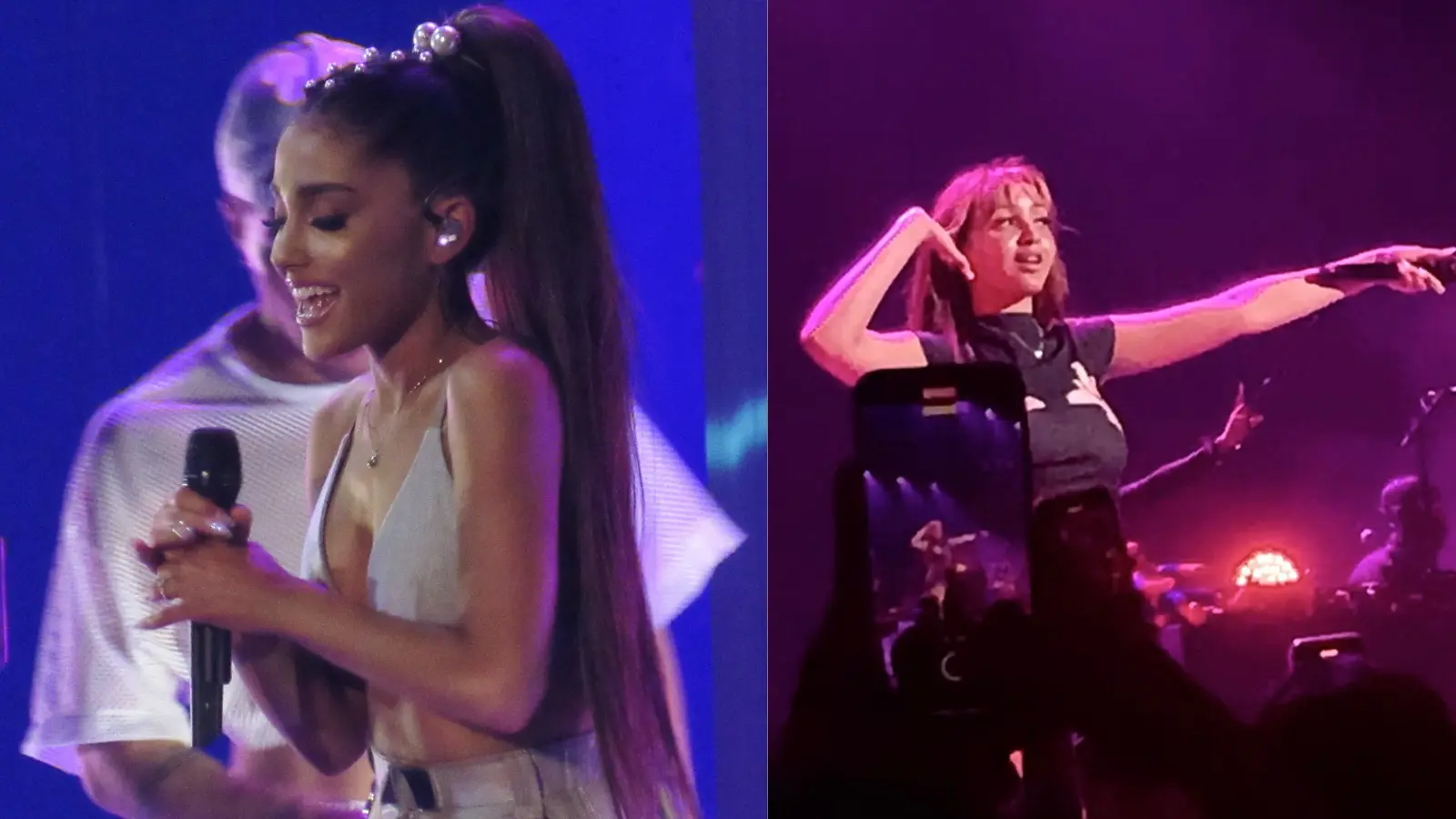
Ariana Grande and Jelly Roll have almost nothing in common, careerwise. One is a pop star finishing an arena tour. She’s walking away from a West End stage debut before it even starts. The other is a country-rap crossover artist.
He spent the last few years turning prison stories into stadium anthems. But in the same stretch of summer 2026, both of them stood in front of a crowd and said some version of the same thing: I need to stop.
There’s a striking pattern in these incidents: celebrities are taking a break from fame before the pressure becomes impossible to sustain. And it’s bigger than just these two.
Ariana Grande’s exit wasn’t really about the musical
When Ariana Grande’s team confirmed she was dropping out of the West End revival of “Sunday in the Park with George,” most headlines focused on the show. They covered the lost reunion with her “Wicked” co-star Jonathan Bailey, and also Barbican production scrambling for a replacement lead. But that’s the smaller story.
The real one is in her rep’s statement. She’s taking “a step back from visibility” after months of relentless commentary about her body and her health.
Grande addressed it herself on stage in Chicago, before the official announcement even dropped. She told fans she wanted to speak to them directly rather than let outside narratives fill the silence.
She’s been here before. Back in 2023, she posted a video asking people to be gentler about commenting on other people’s bodies. This time is different, though. Instead of asking the public to change, she’s changing her own exposure to it.
Her tour wraps September 1 in London. After that, she’s said, she’s not committing to anything that puts her back under a microscope.
Jelly Roll’s timing tells its own story
Jelly Roll’s announcement landed differently, but it lines up. Onstage in Salt Lake City, closing out his co-headlining run with Post Malone, he told the crowd he was stepping away from touring. A year, maybe two. Though, he didn’t spell out why, his words are hinting toowards his mental helath.
“I’m fixing to take some time off and heal,”
Weeks earlier, his divorce from Bunnie Xo had been finalized. Almost ten years of marriage, ended, with a settlement dividing everything from property to intellectual property rights. He played his last scheduled show on July 30 in Colorado Springs. After that, according to his own website, there was simply nothing left on the calendar.
The timing also came shortly after his divorce was finalized, although Jelly Roll did not say that the divorce was the reason for his decision.
They’re not the only celebrities taking a break from fame
Look beyond these two and the list keeps going. The pattern isn’t entirely new. In March, country singer Colter Wall canceled his 2026 live performances. He didn’t soften it, either.
He told fans plainly that he’s mentally unwell, and that pushing through more shows had only made things worse. His team is refunding tickets automatically. No comeback date. No spin.
PinkPantheress provides another recent example. In 2024, she canceled a run of major live commitments, including festival appearances and opening dates for Coldplay, because she said she’d “reached a wall” she couldn’t push through. She said she needed to focus on her physical health and overall wellbeing.
Different genres, different reasons on paper. But the pattern underneath is striking: an artist at the peak of demand choosing to stop, on their own terms, while they still have the leverage to do it.
Why stepping away keeps showing up as the answer
There’s a reason the language around these decisions keeps returning to pressure, health and wellbeing. Fame in today’s time doesn’t come with an off switch. A single photo, a divorce filing, a weight fluctuation, gets picked apart across every platform at once. Often by accounts with zero connection to the person at all.
It also reflects something bigger: a shift in what audiences actually reward. A decade ago, disappearing mid-career risked getting read as instability, or worse, failure. Now it reads as self-awareness.
Fans, generally, side with the artist who says “I need a break” over the one who keeps performing through visible strain in silence. That cultural permission is fairly new. It’s a big part of why more artists are willing to use it.
What happens next
For Grande, the immediate question is who takes over her role at the Barbican. Producers have only said casting will be announced “in due course,” which in theater speak usually means once someone’s contract is actually signed. For Jelly Roll, it’s whether “a year or two” actually holds, or whether one festival slot or awards show pulls him back early, the way these things often go.
For Colter Wall, there’s no timeline at all yet. That’s probably the point.
Whether this becomes a lasting shift in how celebrities handle career pressure remains to be seen. For now, though, the decisions made by Grande, Jelly Roll, Wall and PinkPantheress point to a changing idea of what it means to step away. Taking a break no longer has to be treated as a career crisis. Sometimes, it is simply a decision to put life, health or peace ahead of staying visible.
Featured Image Credits: Wikimedia Commons & Flickr