

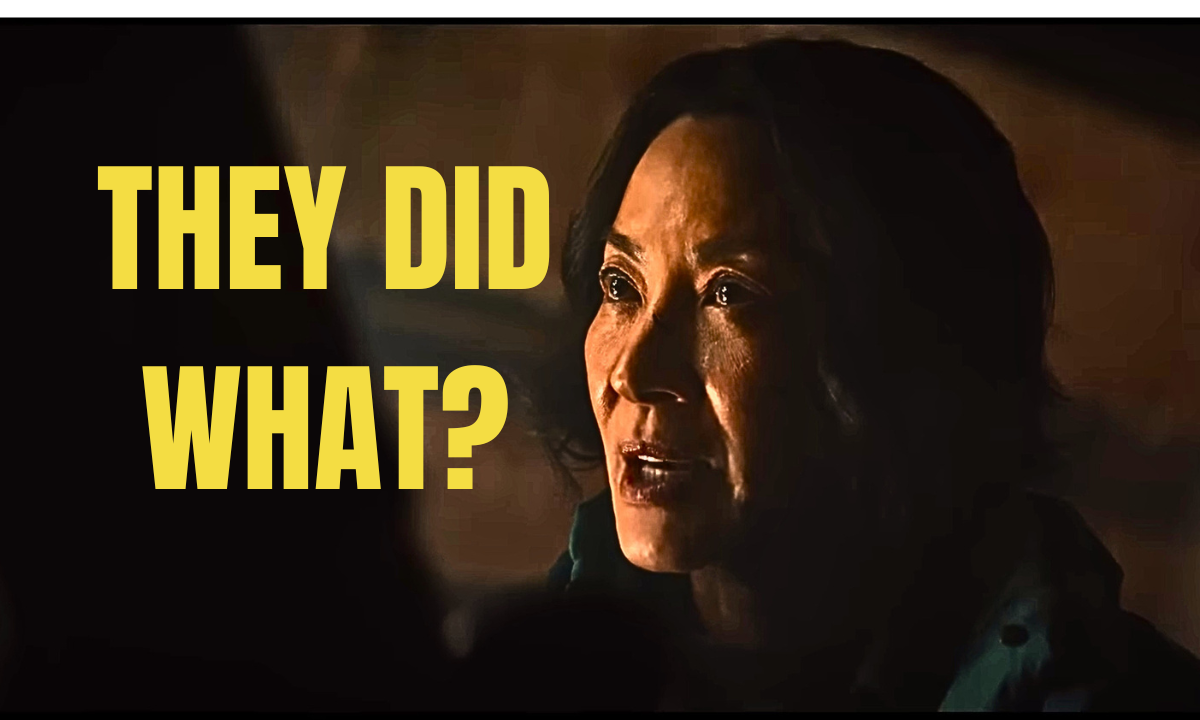
Remember when television used to let a story actually end?
Somewhere along the line, Hollywood decided that every moderately successful show needed to become a sprawling, seven-season “cinematic universe.” Plotlines get stretched paper-thin, beloved characters get dragged through aimless side-quests, and compelling premises slowly bleed out into background noise.
So when the recent flood of Blade Runner 2099 news dropped, confirming Prime Video’s upcoming sci-fi epic would officially be a one-and-done, self-contained limited series, a strange thing happened across the fandom. People weren’t disappointed. They were thrilled.
In an era where many streaming shows are designed to run for years, the decision to make Blade Runner 2099 a self-contained limited series already feels refreshing.
The “Westworld Trap” and Streaming Bloat
Sci-Fi television has a notorious history with the never-ending story problem. Look at Westworld. It kicked off with one of the most acclaimed first seasons, tightly wound first seasons in television history. But because it was a runaway hit, the network naturally wanted to build a forever-brand. What followed was three seasons of increasingly convoluted timelines, existential wandering, and a fanbase that slowly drifted away before the show was ultimately canceled without a real ending.
Streaming platforms love to greenlight massive, expensive sci-fi concepts with the hope of turning them into multi-year subscriber traps. The issue? High-concept sci-fi rarely survives that kind of artificial stretching.
By committing to a strict eight-episode arc, Blade Runner 2099 avoids this trap entirely.
Blade Runner 2099 Limited Series Leaves Zero Room for Filler
The most encouraging detail to emerge from the show’s San Diego Comic-Con press rounds was a quote from showrunner Silka Luisa. Talking about the transition from film to TV, Luisa made it clear that the goal was never to build an ongoing franchise, but to tell a story that feels like a massive, atmospheric movie with a distinct beginning, middle, and end.
More importantly, Luisa confirmed that all eight scripts were fully written and mapped out before cameras even started rolling.
That might sound like standard practice, but in modern television production, it’s practically a miracle. Too many multi-million dollar streaming shows hit set with three finished scripts, a loose outline, and a prayer that the writers can figure out the finale while the crew shoots episode four.
Writing a complete, self-contained Blade Runner 2099 limited series from start to finish ensures every frame serves a purpose. There are no “bottle episodes” designed solely to trim the budget. Every scene, line of dialogue, and visual flex moves the story toward a singular, definitive destination.
What the Blade Runner 2099 Plot Tells Us
That tight structural focus is vital when you look at the actual Blade Runner 2099 plot.
Set 50 full years after Denis Villeneuve’s Blade Runner 2049, the series thrusts us into a radically transformed Los Angeles where the Replicant uprising actually succeeded. Replicants now run the city’s power structures, leaving humans as the marginalized lower class.
The core story focuses on an incredible, inverted dynamic:
- Olwen (played by Oscar-winner Michelle Yeoh) is an aging Replicant Blade Runner who knows down to the exact day when her lifespan expires a tragic thematic mirror to Rutger Hauer’s iconic Roy Batty.
- Cora (played by Hunter Schafer) is a human fugitive pretending to be a Replicant just to survive in a world where being human is a liability.
Together, this unlikely pairing gets dragged into a sprawling conspiracy hiding in the dark, rain-soaked underbelly of LA.
Think about that setup for a second. An elder Replicant counting down her final remaining days on Earth, paired with a desperate human who has traded away her own identity. This isn’t a story designed to go on forever. It is a pressure cooker. Giving this plot a guaranteed ending gives every tick of Olwen’s clock actual weight.
Respecting the Franchise’s DNA
Ridley Scott’s 1982 original was a moody, philosophical noir that asked deep questions about what it means to possess a soul. Denis Villeneuve’s 2017 sequel was a critically acclaimed sequel that expanded on those questions without ever feeling like a desperate cash grab. Both films were self-contained cinematic statements.
By treating this new chapter as an event-level limited series rather than an open-ended TV show, Prime Video is honoring the exact DNA of the franchise. It gives the creators the runtime they need to explore complex cyberpunk philosophy without asking them to dilute the brand for the sake of infinite renewals.
Sci-fi works best when it leaves you wanting more, staring at the screen in awe as the credits roll, processing what you just experienced. If Silka Luisa’s Blade Runner vision sticks the landing, it could set a brand-new standard for how major studios handle classic sci-fi IPs on television.
Sometimes, the best thing a story can do is end.
To see how the cast and creative team frame this limited series structure, watch the Blade Runner 2099 Comic-Con Panel, where Michelle Yeoh, Hunter Schafer, and Silka Luisa break down their vision for the show’s 8-episode narrative arc.